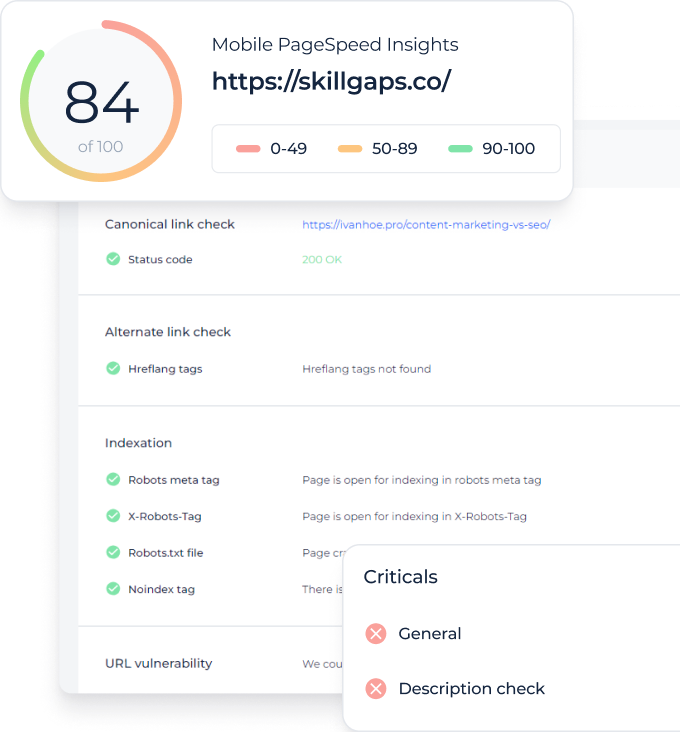
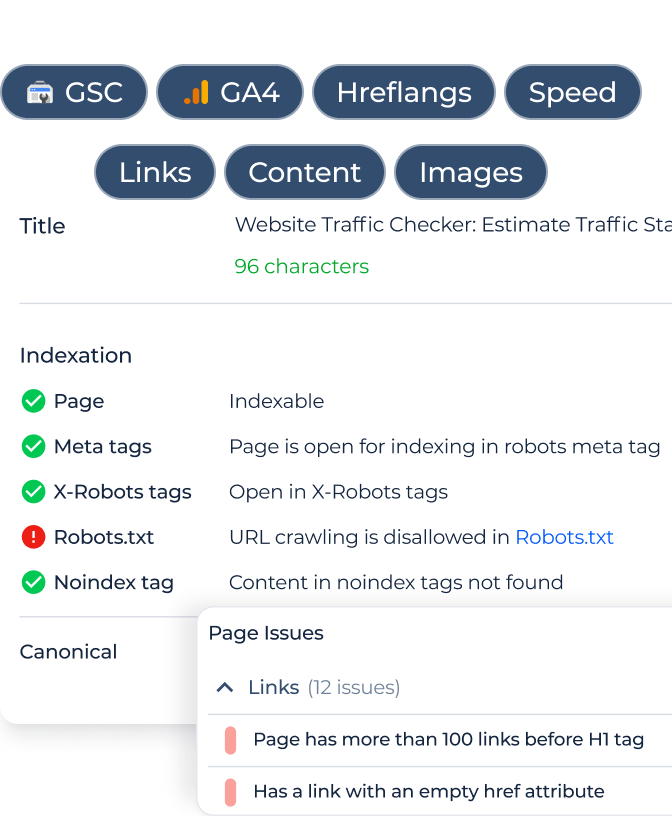
Site audit API for technical SEO and monitoring
Get crawl results, issues, affected pages and every change between crawls from Sitechecker as JSON. Build audits, alerts and tickets into your own workflow.
Site Audit shows the current state. Site Monitoring shows what changed and when.
Site Audit shows the current state. Site Monitoring shows what changed and when.
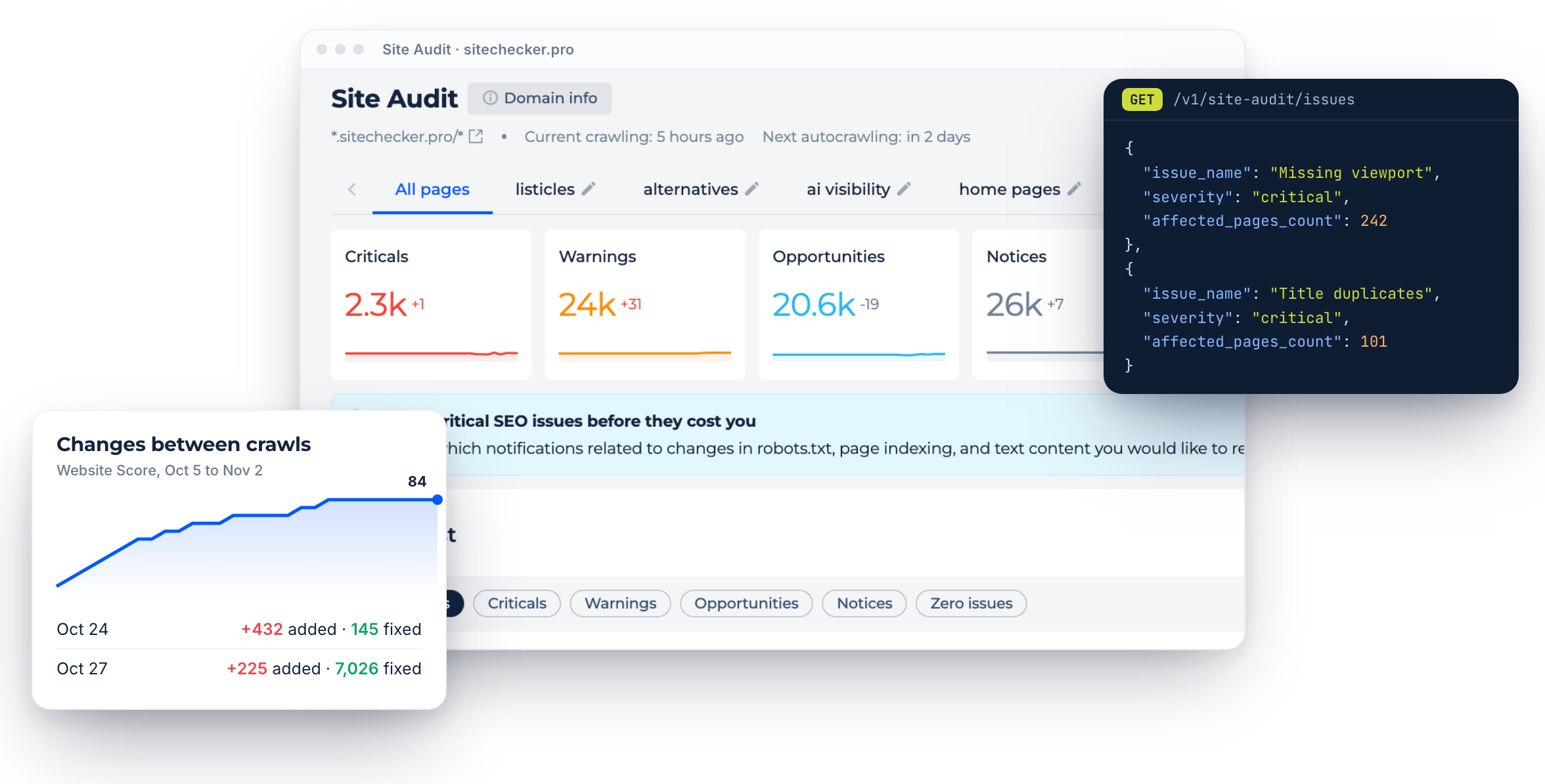
Website Score
Score, crawled pages and issues by severity, compared with the last crawl.
Issues and pages
Every detected issue with the URLs it affects.
Change log
Added and removed issues and content changes between crawls.
Core features of the website audit API
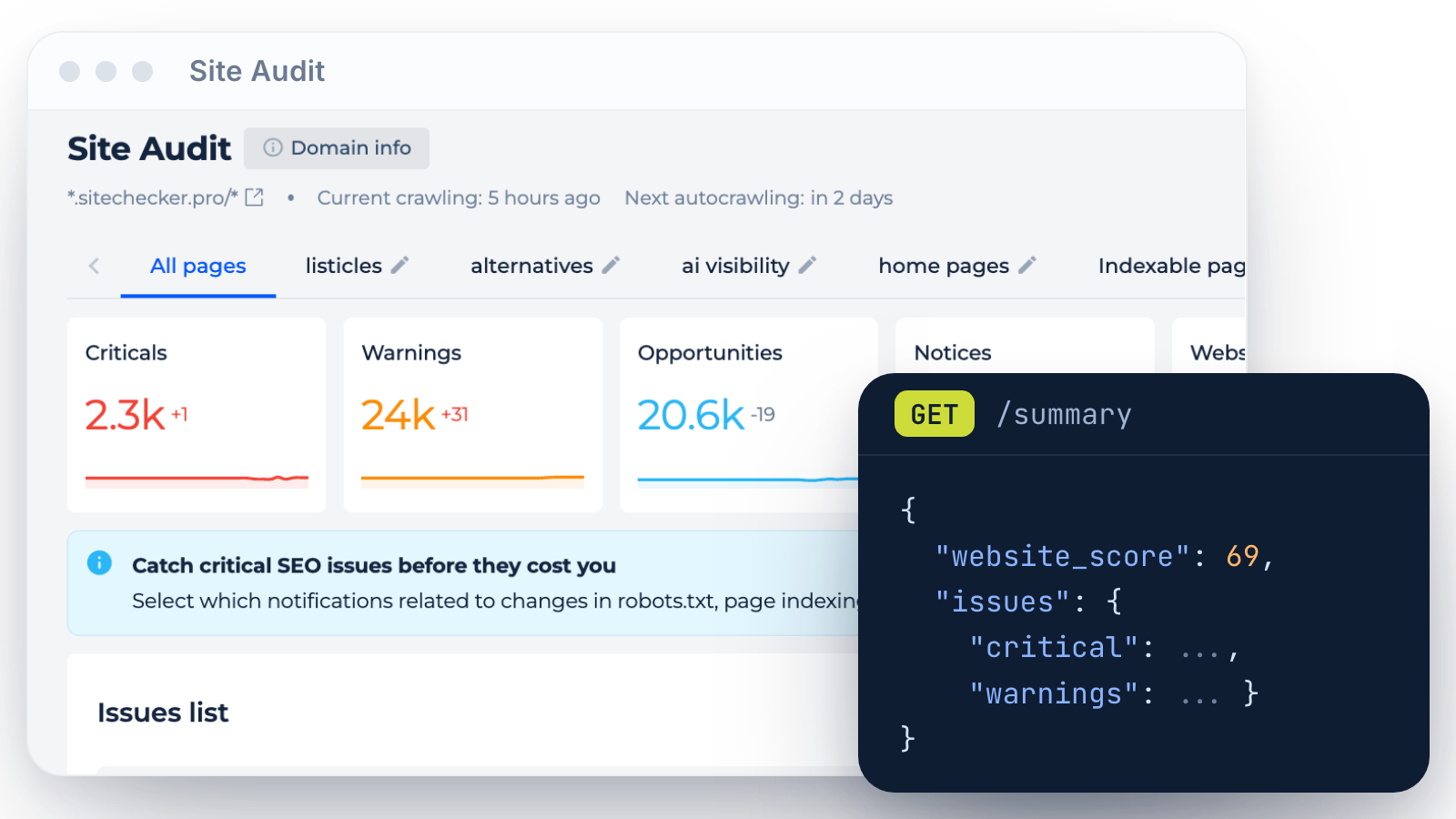
Audit summary and issues
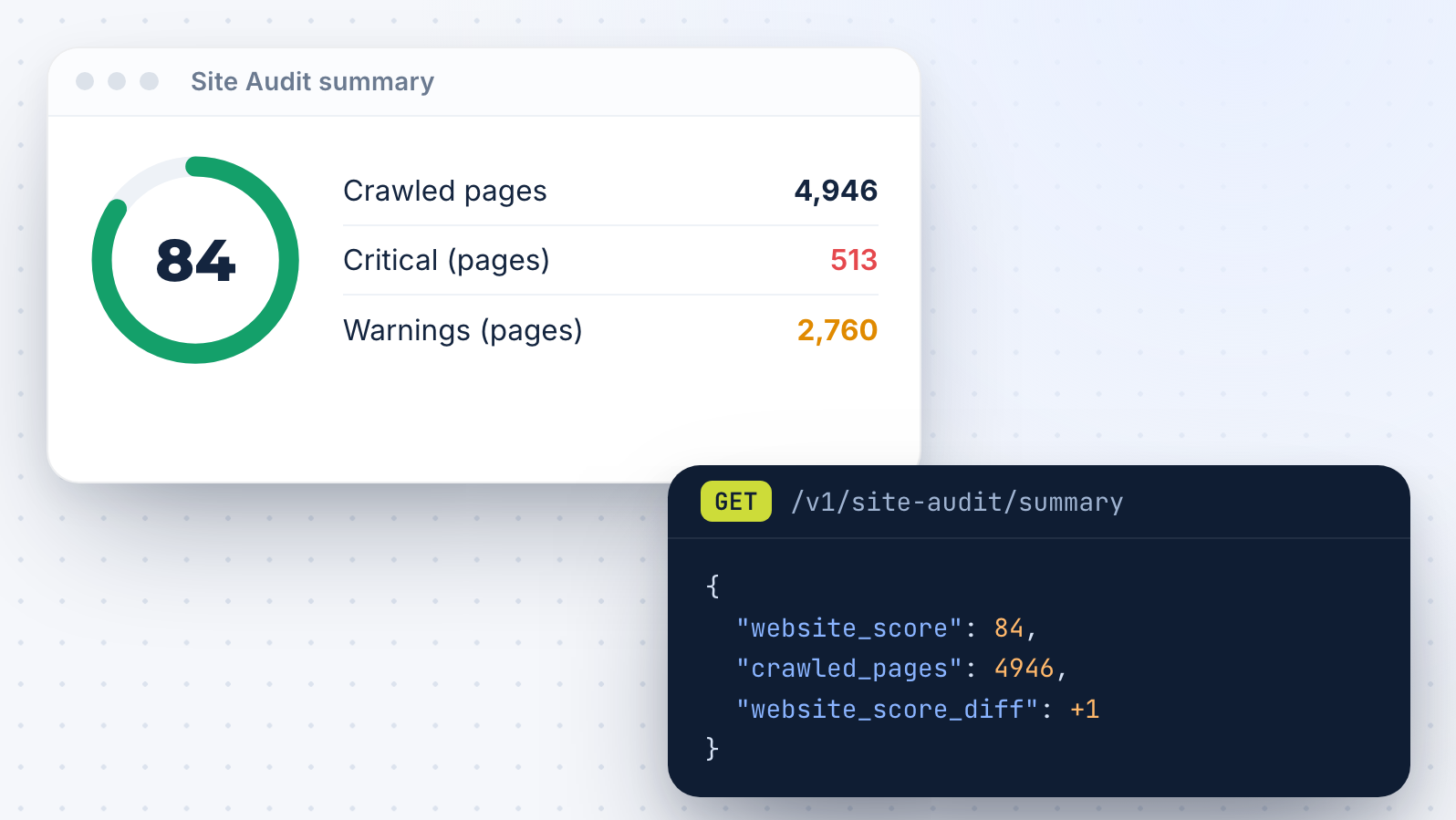
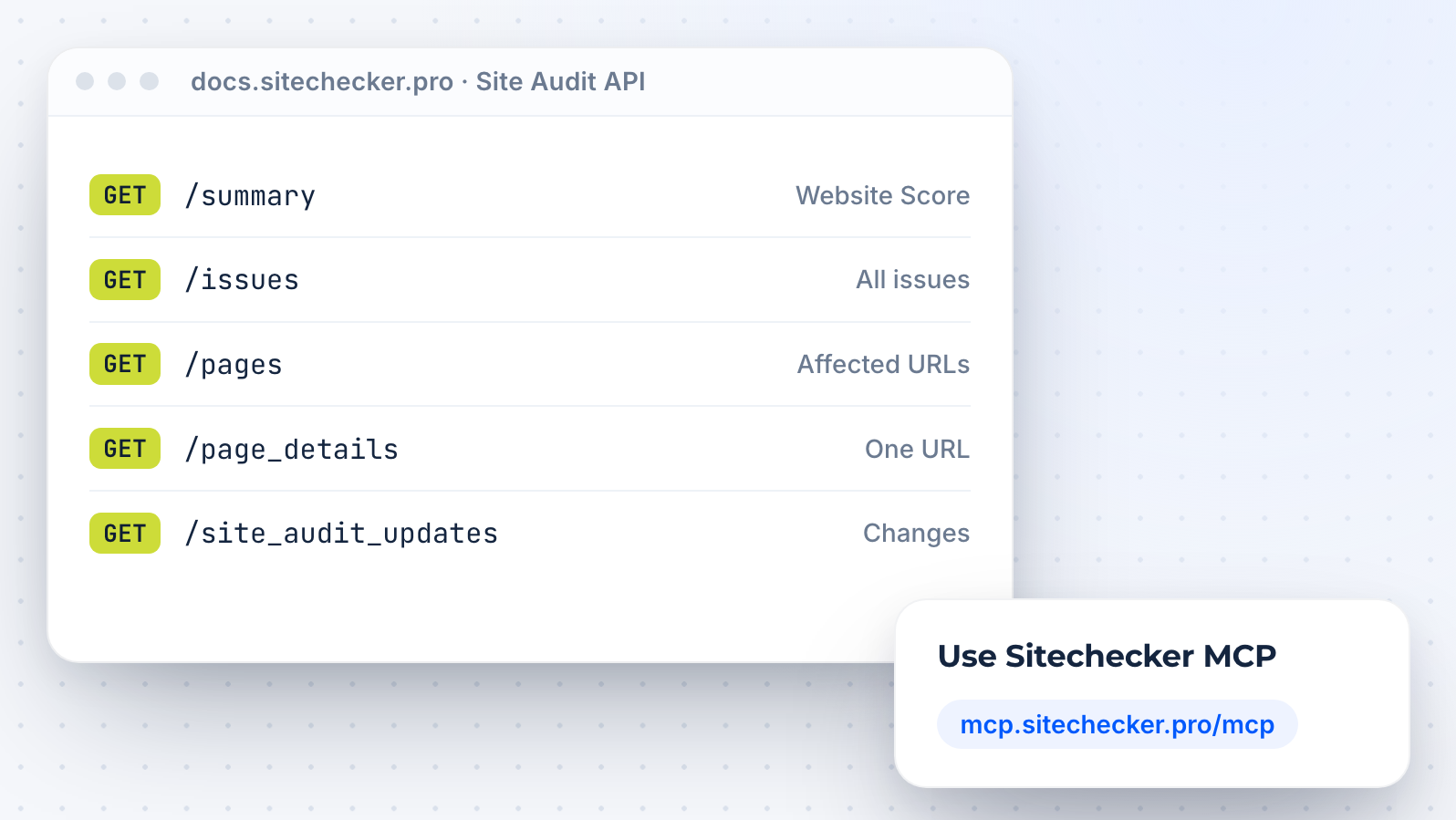
The audit_summary endpoint returns the Website Score, crawled pages and issue counts by severity, each compared with the previous crawl. The audit_issues endpoint lists detected issues and filters by category, severity and segment.
Categories include links, redirects, indexability, duplicate content and page speed, so broken links come out as clean rows.
Categories include links, redirects, indexability, duplicate content and page speed, so broken links come out as clean rows.
Page level details
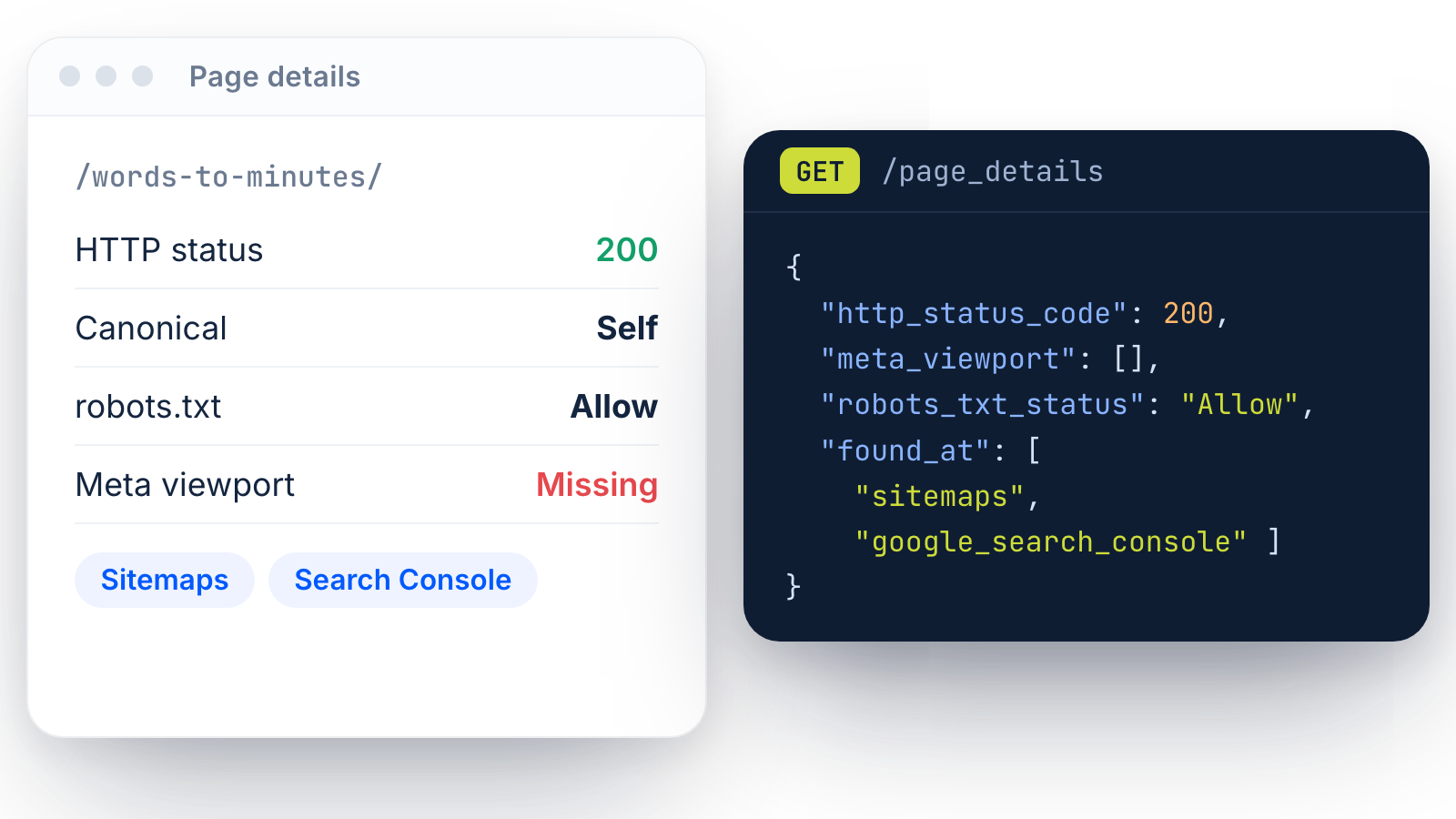
The audit_pages endpoint lists crawled URLs with key audit attributes. The page_details and page_content endpoints return deep technical data for one URL, like internal links, images, CSS and JavaScript files.
Use them to check one template or a key landing page without opening the app.
Use them to check one template or a key landing page without opening the app.
Change monitoring
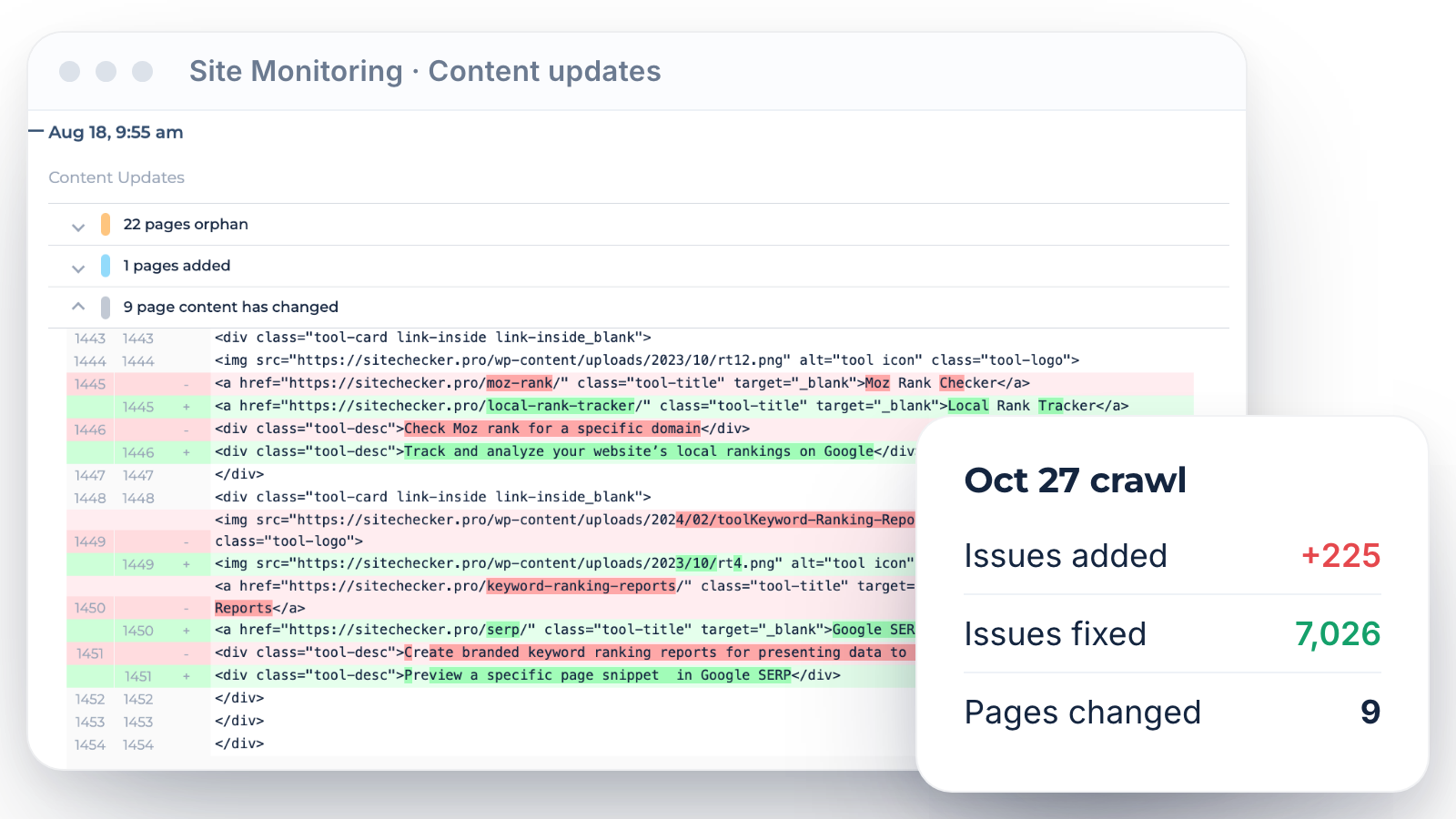
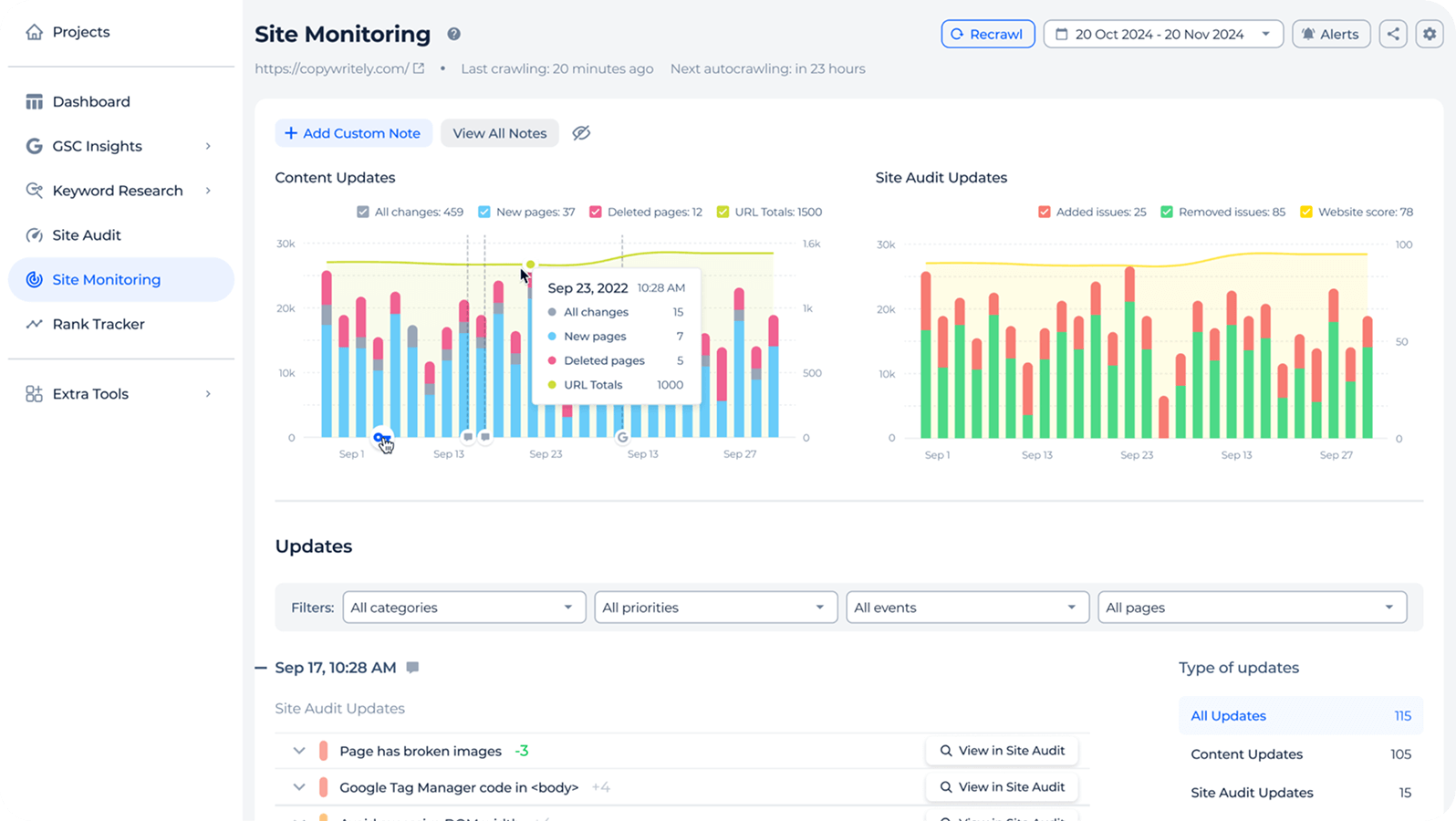
Site Monitoring endpoints return what changed between crawls: added and removed issues, Website Score movement, and new, deleted or changed pages. Content updates include before and after values.
Track one URL over time with page monitoring to see which crawls had changes.
Track one URL over time with page monitoring to see which crawls had changes.
Inside the SEO audit API
What the response covers
Responses are JSON with scores, issues, affected URLs, page details and change events. Summaries include the difference with the previous crawl.
List endpoints return up to 100 rows per request and show the full total.
List endpoints return up to 100 rows per request and show the full total.
Filter by segment
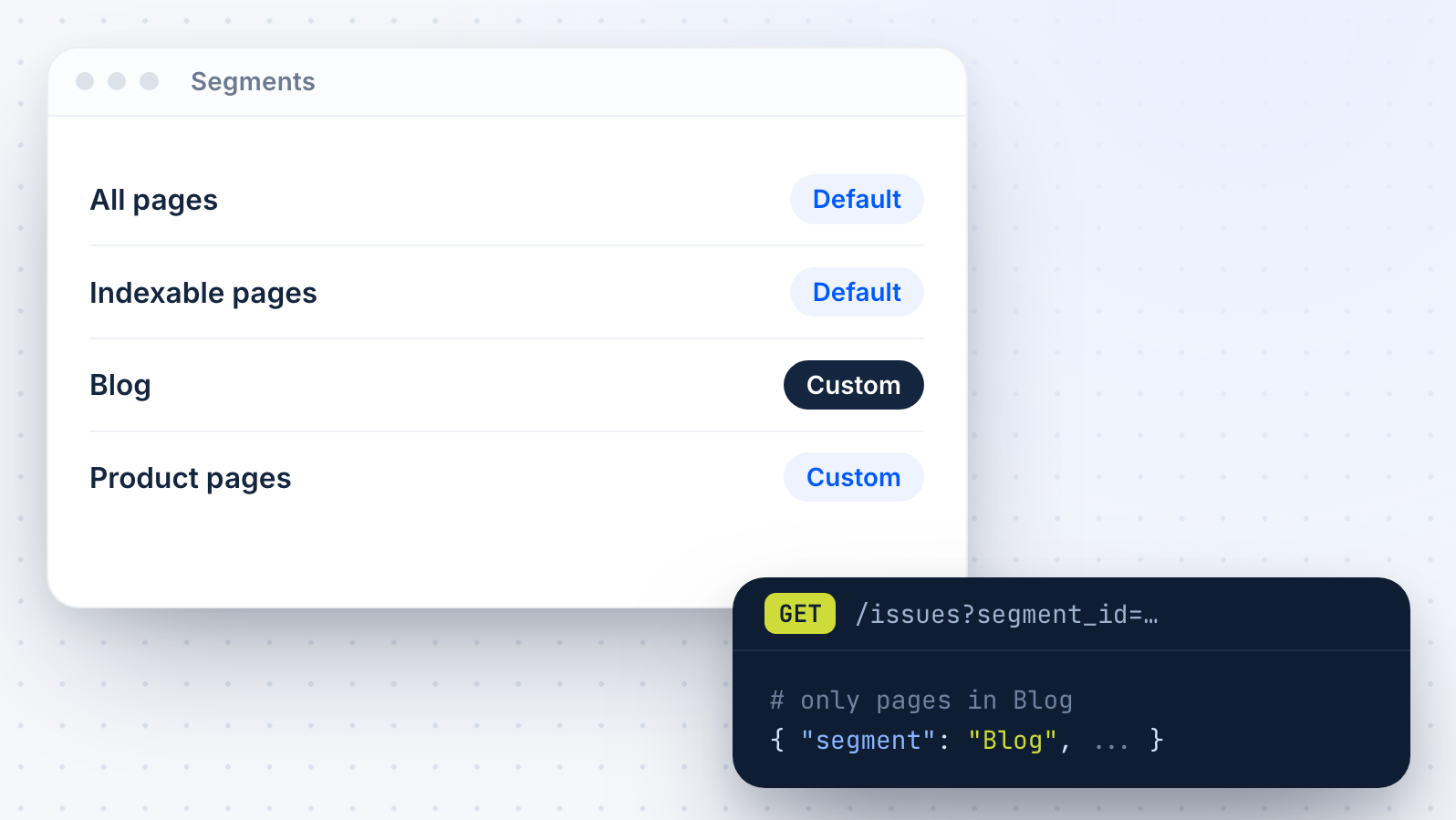
Pass a segment_id to scope summaries, issues and monitoring to the pages that matter. Every project has All pages and Indexable pages, plus your own segments.
Issues to tickets
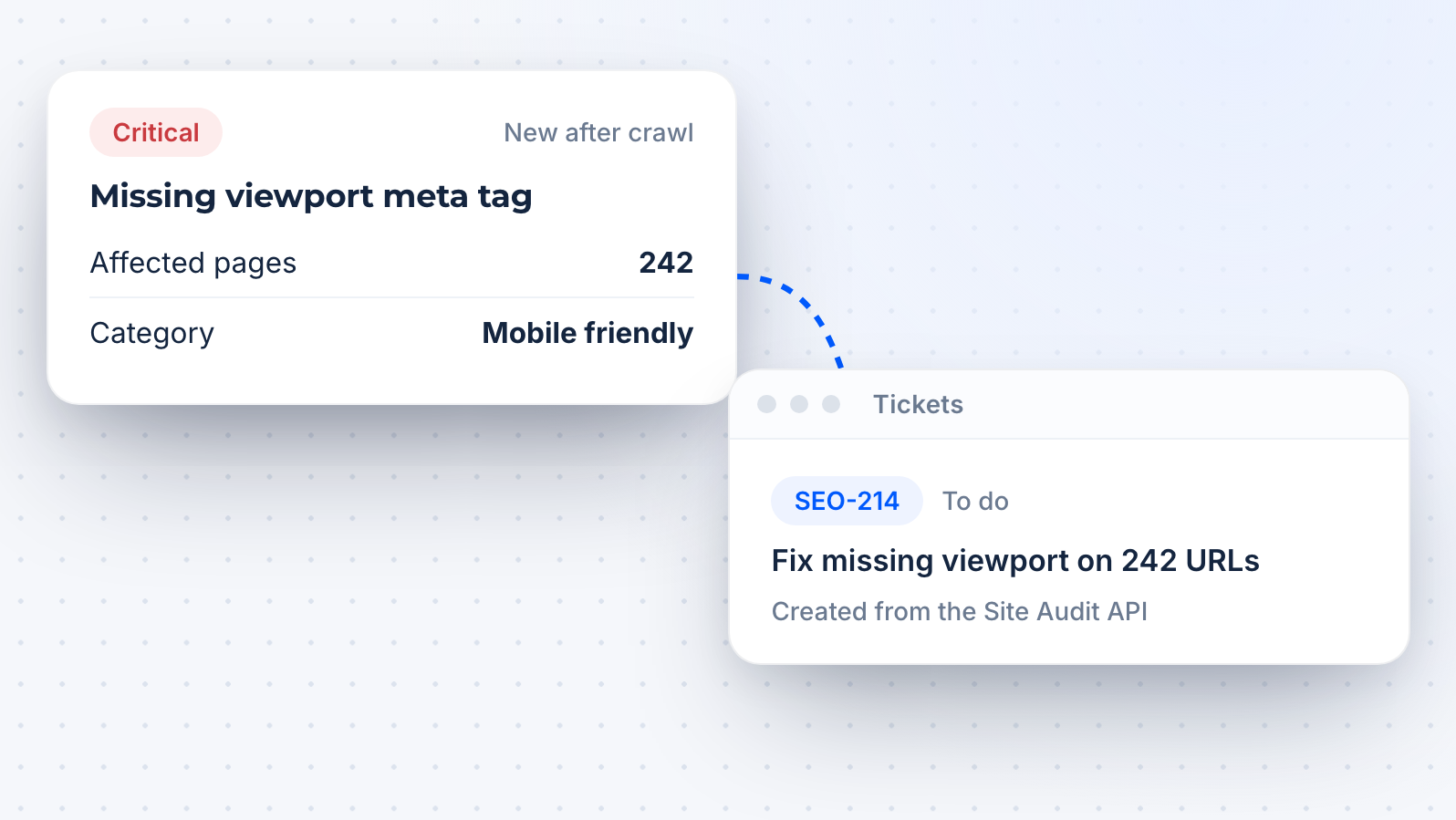
Poll new critical issues after each crawl and create tasks in Jira, Asana or your own ticketing tool. Each issue comes with the URLs it affects.
Deploy and migration QA
After a release, compare crawls with site_audit_updates and check key templates with page monitoring. Catch broken titles, canonicals or status codes before clients do.
Page change monitoring
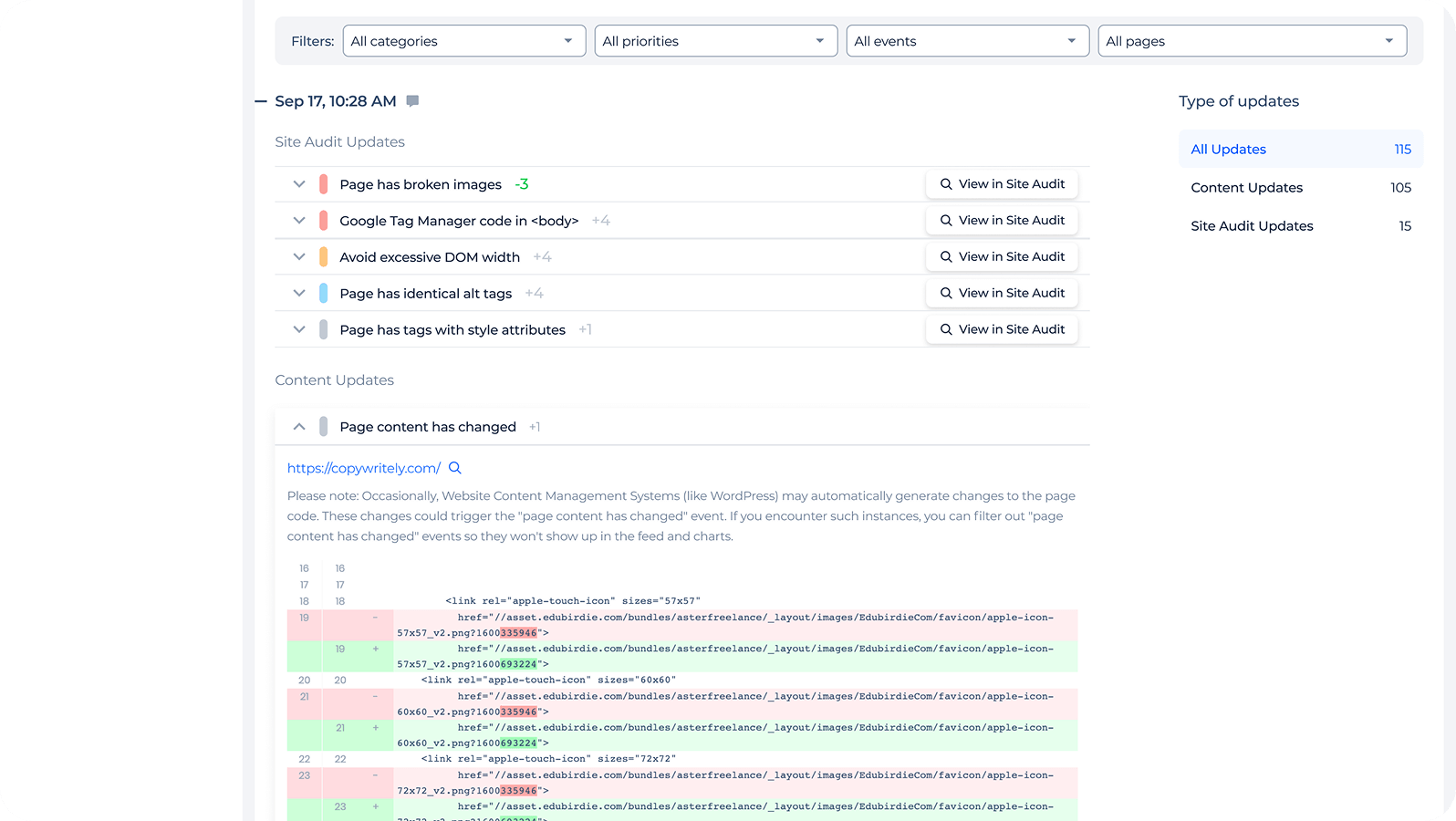
Content updates show unexpected edits, deleted pages and new pages. Send them to Slack or email, so a hacked or broken page is caught fast.


Docs and MCP
See every endpoint in the Sitechecker API docs.
Want answers instead of code? Ask about audits in Claude or ChatGPT through the SEO MCP server, or see all modules on the Sitechecker API page.
Want answers instead of code? Ask about audits in Claude or ChatGPT through the SEO MCP server, or see all modules on the Sitechecker API page.








Join the 1,000+ businesses growing with Sitechecker
All of our clients are growing after we use the platform. For instance, our client Hospital Amazônia had a growth of more than 13.500 impressions from March to September.

After two months there were noticeable improvements in rankings and organic traffic. Backlink and Rank Tracker make it easy to monitor changes, but our website needed also regular SEO audits. We decided to run Sitechecker Audit once a week and it also contributed to the improvement of our results. This audit comes really handy and allows for quick and effective on-site optimization.

Before using Sitechecker our ranking was approx. #4 (mobile SERP) regarding the most important keywords. Now we are #1!



FAQ
What is a site audit API?
A site audit API returns the results of a technical SEO crawl over HTTP. The Sitechecker site audit API returns the Website Score, issues, affected pages and page details as JSON, plus the changes between crawls from Site Monitoring.
What is the difference between Site Audit and Site Monitoring data?
Site Audit data is the current state of the site after the latest crawl. Site Monitoring data is the log of what changed and when.
Use Site Audit for “what is broken now” and Site Monitoring for “what changed last Tuesday”.
Use Site Audit for “what is broken now” and Site Monitoring for “what changed last Tuesday”.
Can I start a new crawl through the API?
Not yet. The API is read-only and returns results from the crawls scheduled in your projects. Crawls run in the website crawler in the app.
Is the API included in my plan, and are there rate limits?
The API is in beta and included at no extra cost on all plans: Basic, Standard, Premium and Custom. Access is unlimited, with no monthly cap on requests.
To keep the service stable, the API returns 429 with a Retry-After header if you send requests too fast.
To keep the service stable, the API returns 429 with a Retry-After header if you send requests too fast.
Do I need a developer?
For tickets, alerts and dashboards, someone needs to send HTTP requests with your API key. If you only want answers, use the site audit MCP through the SEO MCP server and ask in plain language.
How is it different from the in-app tools?
The website crawler and website monitoring tools are where you run crawls and read reports. The API returns the same data as JSON for your own workflows.